From 3.14× to 5.08× ROAS - without increasing the budget.
A D2C toys brand in India was spending consistently on Meta Ads but leaving revenue on the table. This is how the campaigns were restructured, what changed, and what moved as a result.

Strong product.
Underperforming campaigns.
The brand had genuine product-market fit - activity-based, educational, and seasonal toys with a loyal customer base. The problem wasn't demand. It was that the Meta Ads account had grown without structure, and the metrics reflected it.
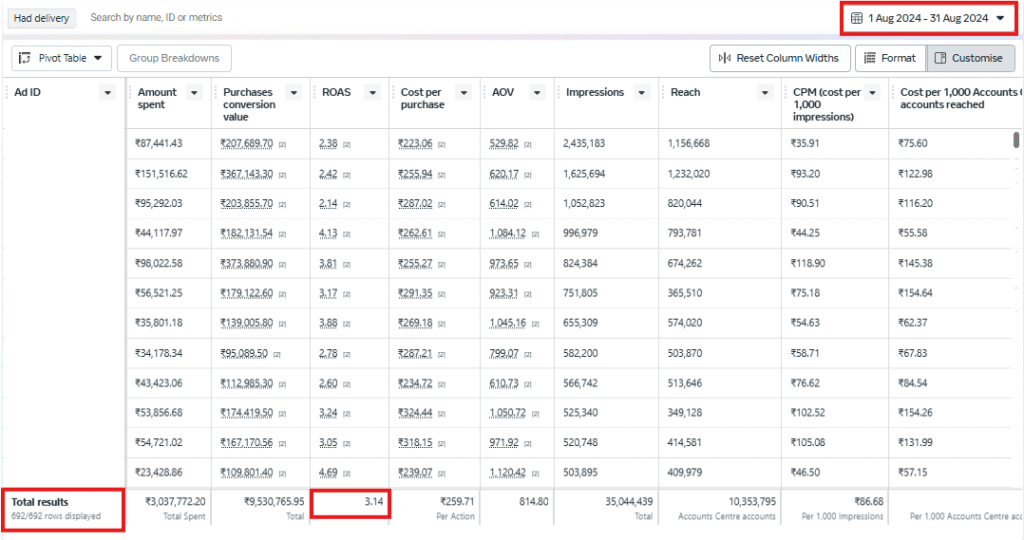
ROAS had plateaued at 3.14× through August 2024. Engagement on posts was strong but wasn't translating into purchases. Average order values were low, which meant the unit economics on paid traffic were tight even at decent ROAS levels.
The question wasn't how to spend more - it was how to get more out of the spend already running.
Account performance - before
Four changes that moved the numbers.
None of these required a bigger budget. All of them required understanding where the account was leaking before touching a single campaign.
Campaigns were restructured to align with where users were in the funnel. Cold audiences - new prospects who had never interacted with the brand - were separated from warm retargeting audiences. Each segment got different creative and different messaging rather than seeing the same ads regardless of intent.
Audience testing ran across interest-based targeting, broad audiences, and multiple lookalikes built from customer purchase data, website events, and social interactions. Regions with consistently higher CPA were identified and spend was reduced there. Ad frequency was brought under control through refined retargeting windows and audience exclusions - high frequency was inflating CPMs without proportional return.
Underperforming creatives were removed, ad sets were consolidated, and the number of simultaneous live ads was limited to keep the algorithm's learning focused rather than spread thin.
The single biggest lever for improving unit economics wasn't the ads - it was where the ads sent people. Traffic was rerouted from individual product pages to curated collection pages, giving shoppers more context, more options, and more reasons to add to cart.
In parallel, the free delivery threshold was raised. This encouraged shoppers who were already buying to add one more item rather than leaving at the minimum. No discounts required - just a better incentive structure at the point of decision.
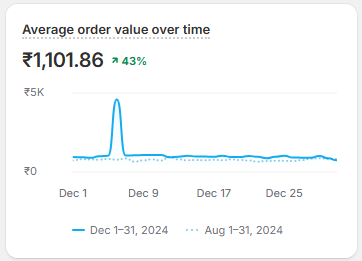
The result: AOV moved from ₹771 to ₹1,100. That's a 42% improvement in revenue per transaction, on the same ad spend.
The creative approach shifted away from engagement-focused content toward intent-focused content. Time-sensitive promotional angles - limited-time offers and themed campaigns tied to seasonal moments - consistently outperformed generic product ads because they gave people a reason to act now rather than later.
Testing ran across product ads versus collection ads, and across product landing pages versus collection pages, to find which combinations converted at each stage. The winners from each test informed the next round of creative briefs rather than running indefinitely until performance dropped.
Products with a consistently high return rate were identified and removed from active promotion. Spending budget to acquire customers who returned the product was inflating revenue metrics while eroding actual margin - stopping promotion of these products reduced refund costs directly.
Post-purchase WhatsApp automation was set up to keep buyers informed about their order status. This reduced the uncertainty that drives return requests - buyers who feel informed about delivery are significantly less likely to initiate a return out of doubt.
Eight weeks. No budget increase.
The improvements compounded - better structure improved signal quality, better signal quality improved bidding, better bidding improved ROAS.
Achieved through campaign restructure, audience separation, and creative rotation - not through increased spend. The algorithm had better signal to work with, so it optimised more accurately.
Collection page routing and free delivery threshold adjustment drove higher cart values without discounting. More revenue per transaction on the same traffic volume.
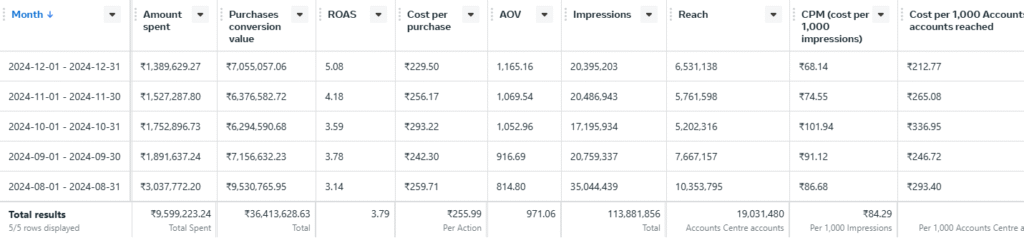
Sometimes growth doesn't come from spending more - it comes from spending smarter. By restructuring how campaigns were built, aligning creative with customer intent, and guiding users to better buying experiences, the campaigns became far more efficient without needing a bigger budget.
A note on detail: To protect client strategy, this case study doesn't disclose targeting specifics, creative formats, or geographic breakdowns. What's shared is the thinking and the approach - the principles that drove the result apply across industries and account types.
Seeing the same problems
in your Meta account?
Start with a short call. If it looks like a fit, you give me access to the account and I'll tell you exactly what's working and what isn't.